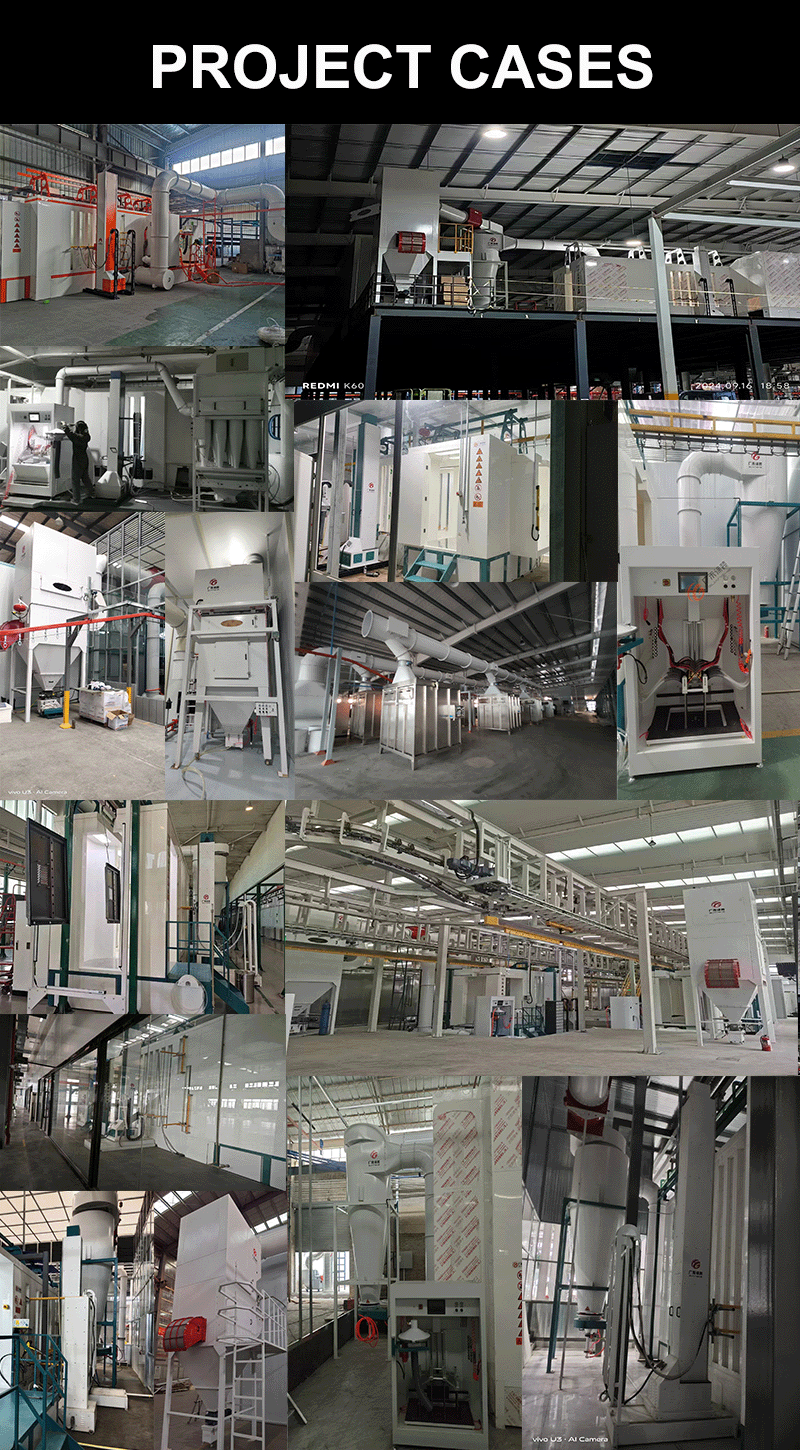
Vibration is the silent enemy of consistent powder coating quality. For manufacturers relying on powder coating reciprocators to automate the spraying of 3–12m architectural aluminum profiles, automotive components, or high-volume hardware, excessive vibration leads to uneven film thickness, orange peel finishes, premature equipment failure, and costly rework. As a 15-year national high-tech enterprise and pioneer of China’s explosion-proof powder coating systems, Guangdong Guanghe Coating Equipment Co., Ltd. (Guanghe) understands this pain point intimately. As a leading powder coating equipment manufacturer trusted by BYD, GREE, and 广亚铝材,we’ve diagnosed and resolved thousands of reciprocator vibration issues across 100+ countries. This guide breaks down the root causes of vibration and provides step-by-step solutions to restore precision to your automatic powder coating line.
1. Why Vibration in a Powder Coating Reciprocator Is a Critical Issue
A powder coating reciprocator (or “shaker”) is designed to move the electrostatic powder coating gun vertically or horizontally at a steady speed, ensuring uniform coverage over large or complex workpieces. Even minor vibration disrupts this precision in three devastating ways:
- Coating Defects: Vertical vibration causes the gun to “bounce,” leading to heavy powder buildup at the bottom of strokes and thin spots at the top—fatal flaws for architectural aluminum profiles requiring AAMA 2604/2605 compliance.
- Equipment Wear: Vibration accelerates the wear of linear guides, drive belts, and gun mounting brackets, doubling maintenance costs and increasing unplanned downtime.
- Safety Risks: In extreme cases, violent vibration can loosen the powder coating gun or damage connections to the powder coating booth’s recovery system, creating safety hazards in explosion-proof environments.
Addressing vibration isn’t just about fixing a machine—it’s about protecting your product quality and production ROI.
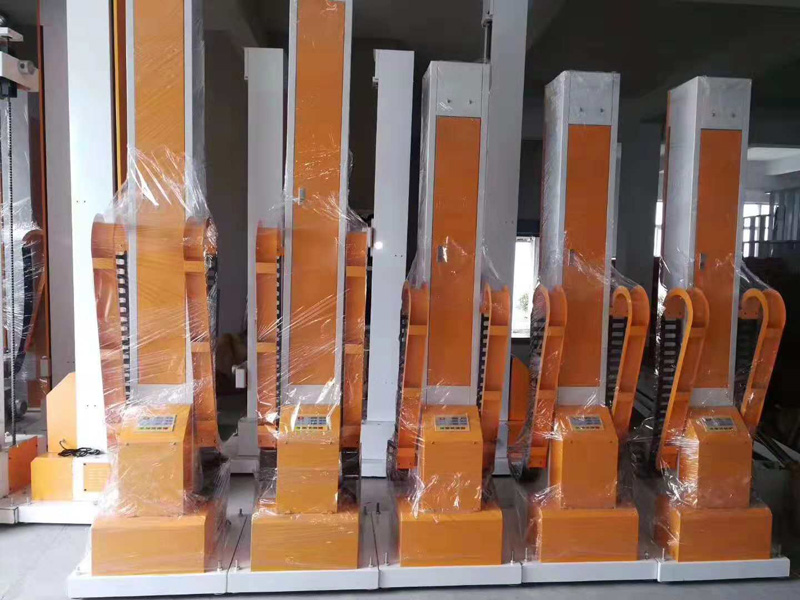
2. Common Causes of Vibration in Powder Coating Reciprocators
Vibration rarely occurs due to a single factor. It is usually the result of mechanical wear, improper setup, or incompatible components. Below are the six most prevalent causes, along with how to identify them, based on Guanghe’s field service experience:
a) Unbalanced or Misaligned Reciprocator Arm
The reciprocator arm (which holds the spray gun) is the most common culprit. If the arm is bent, or if the gun/mounting bracket is installed off-center, it creates an imbalance during high-speed movement.
- How to Identify: Run the reciprocator empty (without the gun) at operating speed. If vibration persists, the arm itself is misaligned or warped. Check for visible bends or gaps between the arm and the linear guide rail.
- Industry Insight: This is especially common in reciprocators paired with vertical powder coating lines for long aluminum profiles, where the arm must extend to cover 12m lengths.
b) Worn or Damaged Drive Components
The drive system—consisting of motors, pulleys, belts, and ball screws—transfers power to the arm. Worn timing belts (cracked or stretched), loose pulleys, or failing ball bearings create inconsistent motion, leading to vibration.
How to Identify: Listen for a “slapping” sound (loose belt) or a grinding noise (worn bearings). Inspect the drive belt for fraying; a worn belt will cause the arm to jerk rather than glide.
c) Incorrect Speed Settings vs. Load
Every reciprocator has a maximum weight capacity for the gun and cable assembly. Running the unit at high speeds (e.g., 6m/min) while carrying a heavy automatic gun or thick powder feed hose creates excessive load on the motor and drive train.
How to Identify: Vibration intensifies as the reciprocator speed increases. This is a frequent issue for manufacturers who upgrade their high-volume powder coating guns without adjusting reciprocator settings.
d) Loose Fasteners and Mounting Hardware
Over time, the constant back-and-forth motion can loosen bolts securing the reciprocator to the booth frame or floor. A poorly anchored unit will “walk” on its mounts, amplifying vibration throughout the system.
How to Identify: Visually inspect all mounting bolts and base plates. Use a wrench to test for tightness—loose bolts are the easiest and cheapest fix.
e) Contamination in Linear Guides or Bearings
Powder coating environments are dusty. If fine powder particles or lubricant residue build up in the reciprocator’s linear guides or ball bearings, they create friction and resistance, causing the arm to stick and then jump, resulting in vibration.
How to Identify: The reciprocator movement is jerky or inconsistent. This is a critical issue in high-recovery powder coating booths where powder concentration is high.
f) Incompatible Gun and Reciprocator Integration
Not all powder coating guns are designed to fit every reciprocator. Using an after-market gun with a non-OEM mounting bracket can create a 重心 (center of gravity) shift, leading to constant vibration.
How to Identify: Vibration only occurs when the gun is mounted. This is why Guanghe designs its reciprocators to be fully compatible with our proprietary electrostatic powder coating guns.
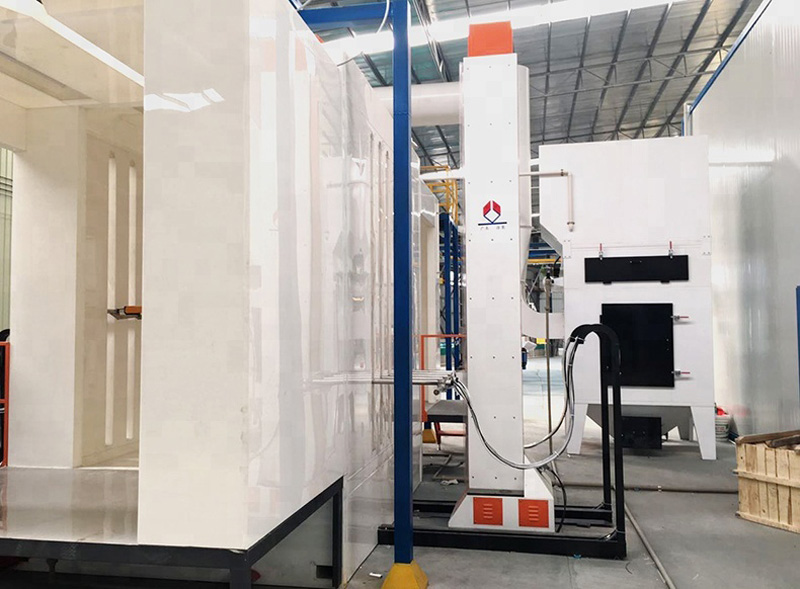
3. Step-by-Step Solutions to Fix Reciprocator Vibration
Resolving vibration requires a systematic approach. Start with the simplest checks (fasteners) before moving to more complex mechanical repairs. Guanghe recommends this 5-step process for a permanent fix:
Step 1: Perform a Visual Inspection & Tighten Fasteners
Action: Power off and lock out the reciprocator. Inspect and torque all mounting bolts, arm clamps, gun brackets, and drive pulley bolts to the manufacturer’s specifications.
Guanghe Tip: Use thread-locking compound on base plate bolts to prevent them from loosening again in high-vibration environments.
Step 2: Realign and Balance the Reciprocator Arm
Action: Remove the powder coating gun. Use a spirit level to check if the arm is perfectly parallel to the linear guide. If bent, replace the arm (do not attempt to straighten it, as this weakens the metal).
Critical Check: Reinstall the gun and ensure it is centered on the arm. For dual-gun setups, ensure both guns are identical in weight and positioned symmetrically.
Step 3: Inspect and Replace Worn Drive Components
Action: Check the drive belt for wear. If it has cracks or is stretched, replace it with an OEM belt. Inspect motor bearings for smooth rotation; if grinding is detected, replace the bearings or motor.
Upgrade Option: Guanghe’s premium reciprocators use servo motors and ball screw drives (instead of belts), which eliminate vibration entirely and offer 10x longer service life.
Step 4: Clean and Lubricate Linear Guides
Action: Use a clean, dry brush to remove powder contamination from the linear guides. Wipe with a lint-free cloth and apply a thin layer of anti-static lubricant (compatible with powder coating environments).
Preventative Measure: Install dust boots on the linear guides to block powder from entering the bearings—a standard feature on Guanghe reciprocators.
Step 5: Adjust Speed Settings and Verify Compatibility
Action: Reduce the reciprocator speed incrementally until vibration stops. Refer to the user manual for the recommended speed-to-load ratio.
Integration Check: Ensure you are using an OEM gun and bracket. Guanghe’s automatic powder coating guns are engineered with lightweight materials to minimize load on reciprocator arms.
4. Preventative Maintenance to Avoid Future Vibration
- The best way to deal with vibration is to prevent it from occurring in the first place. Implement this maintenance schedule, recommended by Guanghe’s service team, to keep your reciprocator running smoothly:
- Daily: Wipe down the linear guides and gun bracket to remove loose powder.
- Weekly: Inspect drive belts and fasteners for signs of wear or looseness.
- Monthly: Clean and lubricate linear guides; check arm alignment.
- Annually: Complete a full teardown inspection, replace worn bearings, and calibrate the motor with the powder coating line’s PLC system.
5. Why Guanghe’s Powder Coating Reciprocators Minimize Vibration
- As a manufacturer with 40+ patents, Guanghe designs reciprocators specifically to eliminate vibration, even in the most demanding 24/7 production environments:
- Servo Motor Precision: Our reciprocators use high-torque servo motors and ball screw drives for ultra-smooth movement (±0.1mm positioning accuracy), eliminating belt-driven vibration.
- Rigid Arm Construction: Made from high-strength aluminum alloy, our arms resist bending and are perfectly balanced for our electrostatic powder coating guns.
- Sealed Bearing Design: Explosion-proof and dust-tight bearings prevent contamination, a must for explosion-proof powder coating booths.
- Turnkey Compatibility: Every reciprocator is pre-tested with our vertical powder coating lines and guns at our factory, ensuring zero integration-induced vibration.
- Global Support: Our service teams in 50+ countries can perform on-site alignment and maintenance to keep your system running vibration-free.
Conclusion: Eliminate Vibration, Elevate Quality
Excessive vibration in a powder coating reciprocator is more than a nuisance—it’s a direct threat to your bottom line, causing rework, material waste, and equipment failure. By identifying the root cause (loose fasteners, worn parts, or misalignment) and applying the step-by-step fixes outlined above, you can restore the precision of your automatic spraying process.
For manufacturers looking to avoid these issues entirely, investing in a high-quality, purpose-built reciprocator from a trusted manufacturer like Guanghe is the ultimate solution. Our vibration-free design ensures consistent, factory-perfect finishes on every workpiece, from the longest aluminum profiles to the most intricate automotive parts.
Ready to Upgrade to a Vibration-Free Reciprocator?
Don’t let vibration compromise your powder coating quality. Visit https://www.powdercoatequipment.com/ to explore Guanghe’s range of high-precision powder coating reciprocators, or contact our export engineers at ghexport@coatmach.com / +86-18520992137 for a free consultation. Let us help you diagnose your current system or design a turnkey solution that guarantees smooth operation and flawless results.